Research

Research areas

Computer vision, representation learning, and their applications in biometrics, language, and medical imaging.

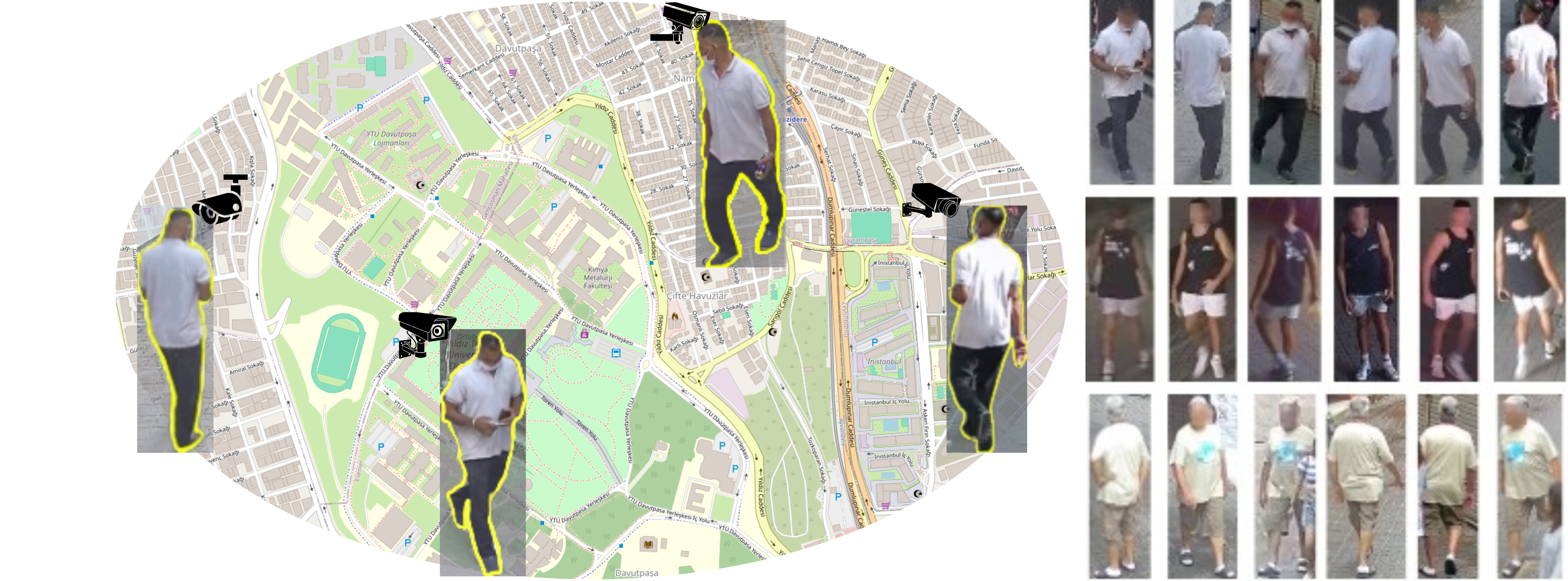
Person re-identification samples across camera views Biometrics

Person Re-Identification

Matching individuals across non-overlapping cameras is fundamentally a problem of robust visual representation.

My work develops ReID models that generalize beyond their training environments despite changes in lighting, viewpoint, occlusion, camera characteristics, and background. The emphasis is on feature representations, domain adaptation, sampling strategies, and efficient fine-tuning for practical deployment.
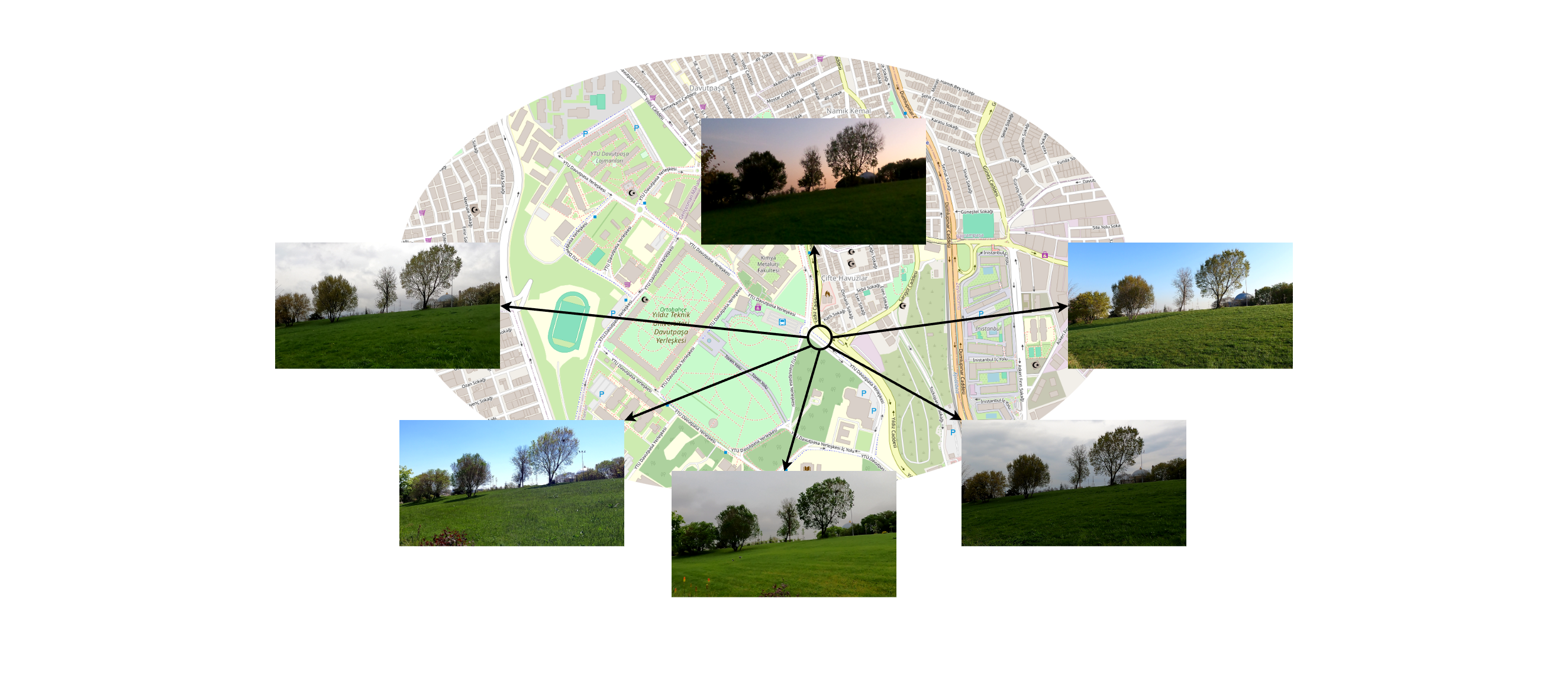
Visual geo-localization imagery under different environmental conditions Visual place recognition

Geo-Localization

Reliable place recognition requires dense visual coverage and resilience to environmental variation.

I investigate visual place recognition under changes in illumination, weather, season, and viewpoint—conditions where GPS can be unreliable or unavailable. The goal is to combine high-resolution imagery and precise location metadata to improve dense coverage and cross-condition generalization.

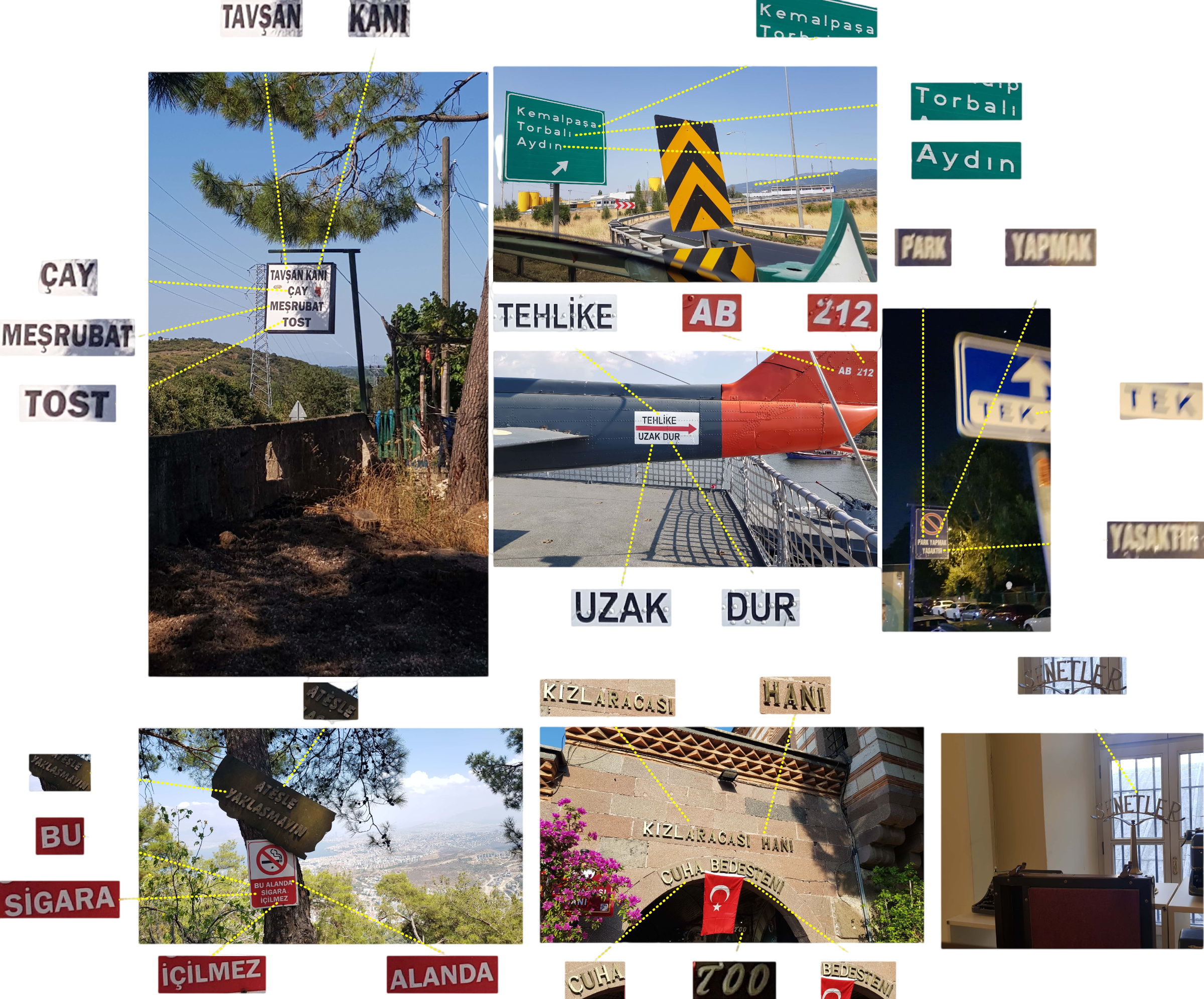
Turkish words photographed in natural scenes Multilingual vision

Scene Text Recognition

Reading text in natural images means handling irregular layouts, noise, low resolution, and language-specific characters.

My scene-text research develops real and synthetic datasets alongside lightweight recognition architectures, with a particular focus on Turkish. This work addresses diacritics, diverse fonts, complex backgrounds, and the gap between English-centric benchmarks and multilingual real-world use.

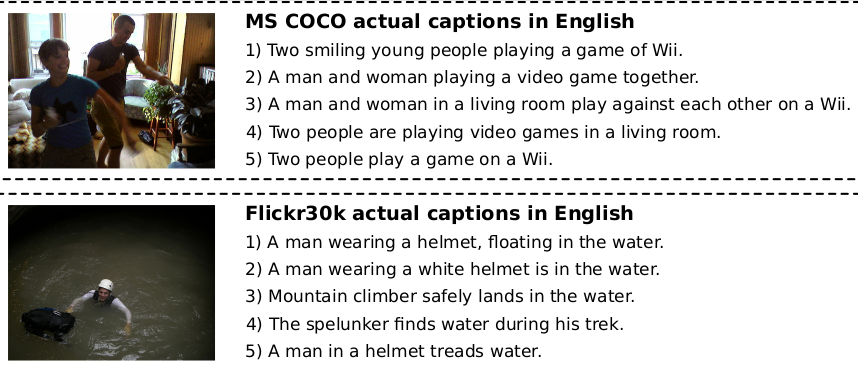
Example of a vision-language image captioning system Vision & language

Image Captioning

Captioning connects visual perception with language, making image content accessible and searchable.

I build datasets and encoder–decoder models for Turkish image captioning, an area where annotated data is limited. Using vision transformers, contrastive encoders, linguistic decoders, and machine translation, the work aims for captions that are both syntactically sound and visually grounded.

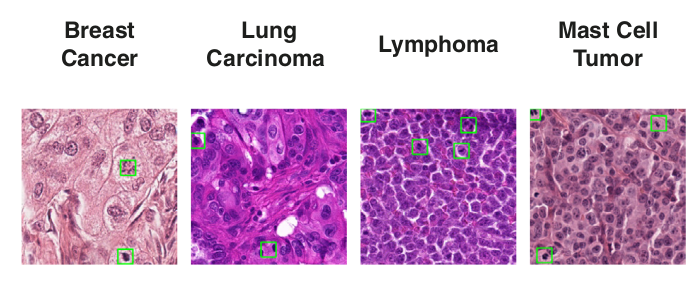
Detected mitotic figures in histopathology Computational pathology

Mitosis Detection

Mitotic figures are rare, visually ambiguous targets whose detection can support cancer diagnosis and prognosis.

My research focuses on reducing false positives and improving robustness across tissue types, scanners, and staining protocols. Task-specific detector design and domain-aware evaluation help move these systems closer to reliable use in computer-assisted pathology.

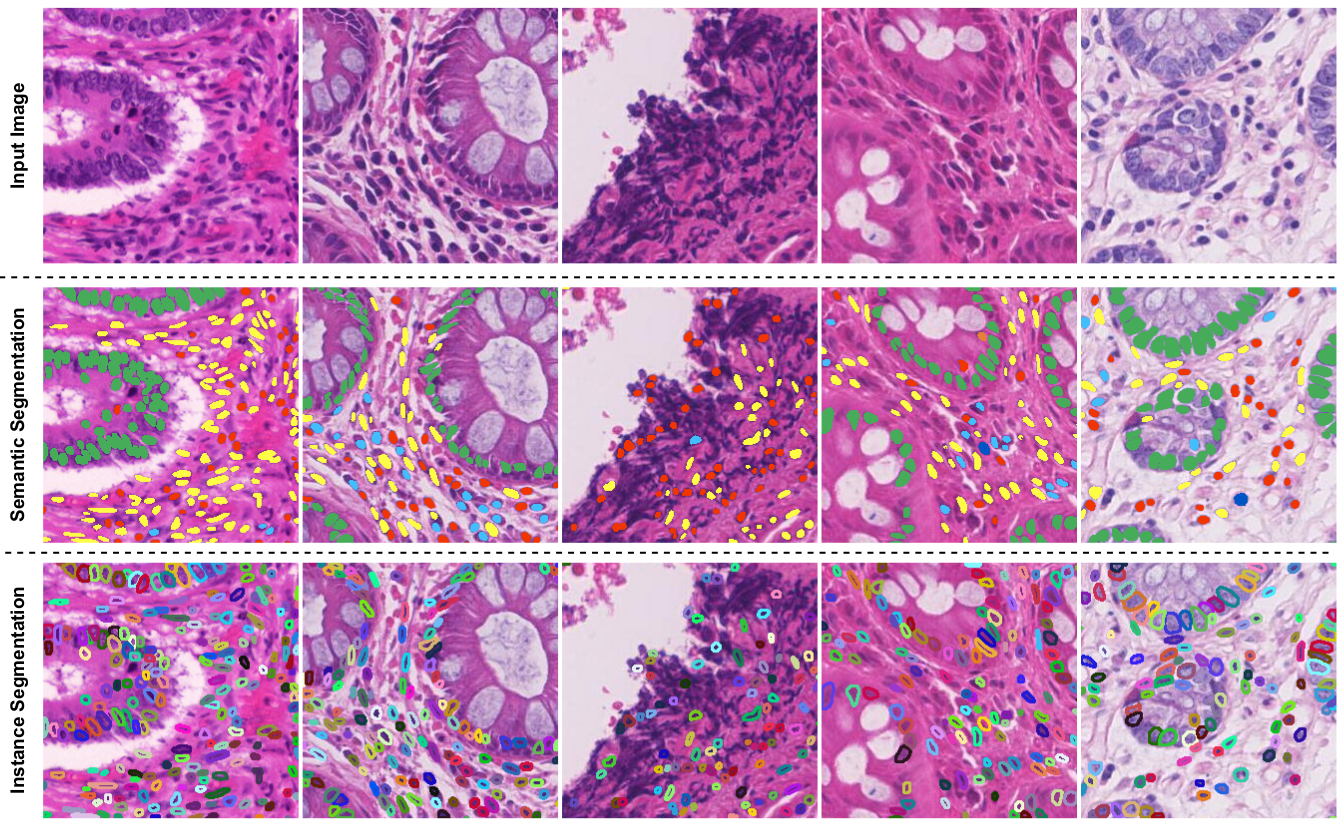
Segmented cell nuclei in a histology image Medical image analysis

Nuclei Instance Segmentation

Accurate nuclei boundaries enable quantitative tissue analysis, yet clustered cells and imbalanced data remain difficult.

Building on my MSc research, I study instance and semantic segmentation with U-Net, transformer, and object-detection-based models. The work includes loss-function analysis, ensemble learning, instance pruning, and standardized cross-dataset evaluation on histology benchmarks.

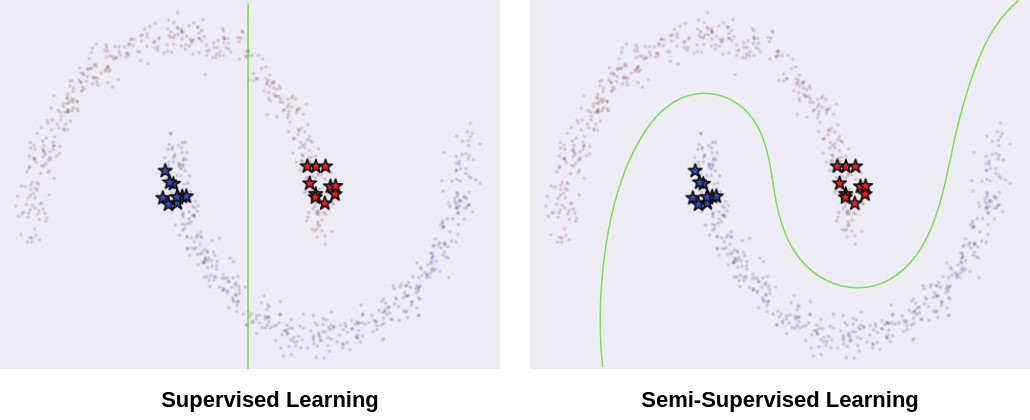
Semi-supervised learning concept with labeled and unlabeled data Learning methods

Semi-Supervised Learning

When expert labels are expensive, unlabeled data can make learning systems more capable and adaptable.

I explore iterative pseudo-labeling and ensemble strategies that improve reliability across datasets and domains. This theme supports the wider research agenda: learning representations that transfer with less annotation and remain useful under real-world distribution shifts.